logo

Detalhes dos produtos

Created with Pixso. Casa Created with Pixso. produtos Created with Pixso.
giroscópio da fibra ótica
Created with Pixso.

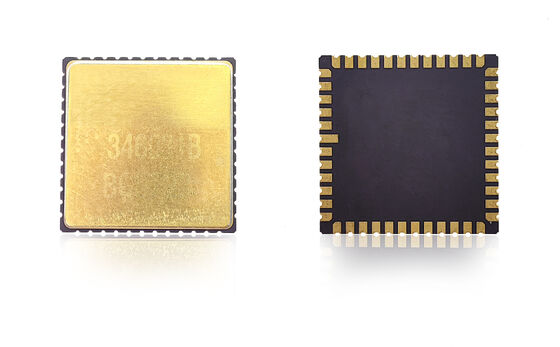
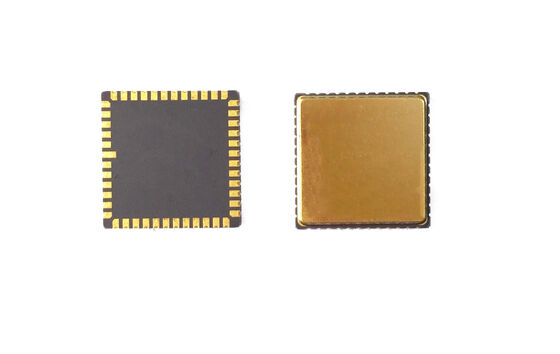
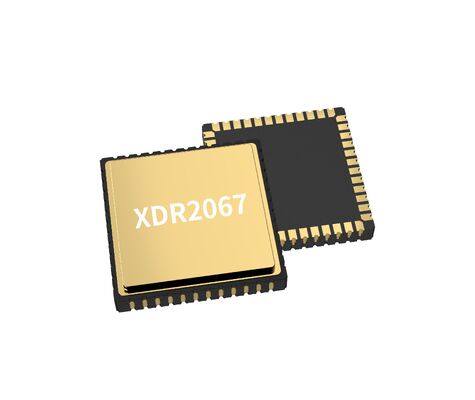
High Reliability MEMS Gyro Chip for Robotics and Autonomous System

High Reliability MEMS Gyro Chip for Robotics and Autonomous System

Nome da marca: Firepower
Número do modelo: MGZ221HC
MOQ: 1
preço: Negociável
Condições de pagamento: T/T, L/C, União Ocidental
Capacidade de abastecimento: 100 PCs/mês
Informações pormenorizadas
Lugar de origem:
China
Nome do produto:
PCB GYRO
Faixa:
400 graus/s
largura de banda:
>200Hz, @3dB
Resolução:
24 bits
Fator de escala:
16.000 lsb/graus/s, @25℃
Atraso (personalizado):
< 1,5 ms
Detalhes da embalagem:
sponge+box
Habilidade da fonte:
100 PCs/mês
Descrição do produto
High Reliability MEMS Gyro Chip for Robotics and Autonomous System
High-Precision MEMS Gyroscope for Inertial Measurement Unit

Our MEMS gyroscope chip delivers high-precision angular rate sensing for advanced inertial navigation and motion control applications. Designed with aerospace-level reliability and industrial-grade durability, it provides ultra-low noise, low bias instability, and excellent temperature stability for platforms that require long-term accuracy and robust performance.

Engineered for UAVs, autonomous robots, and industrial equipment, this MEMS gyro chip offers fast dynamic response, compact form factor, and low power consumption—making it ideal for embedded navigation systems and precision motion platforms.

PCB Design Guidelines
  • Decoupling capacitors for pins VCP, VREF, VBUF, and VREG should be placed as close to the pins as possible with minimized trace resistance
  • Other ends of decoupling capacitors for VREF, VBUF, and VREG should connect to nearest AVSS_LN and then to signal ground via a magnetic bead
  • Decoupling capacitors for VCC and VIO must be placed close to corresponding pins
  • VCC operation requires about 35mA current - use wide PCB traces for voltage stability
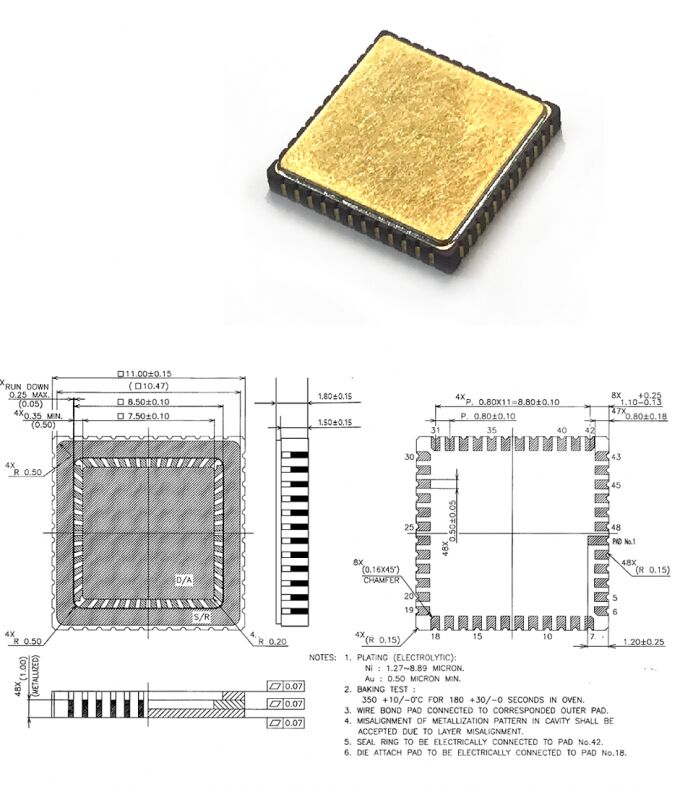
  • Avoid routing under the package for smooth assembly
  • Position components away from stress concentration areas, heat sources, and mechanical contact points
High Reliability MEMS Gyro Chip for Robotics and Autonomous System 0
Technical Specifications
Performance Unit MGZ318HC-A1 MGZ221HC-A4 MGZ330HC-O1
Range deg/s 400 400 400
Band Width @3DB customized Hz 200 200 300
Output accuracy(digital SPI) bits 24 24 24
Output rate(ODR)(customized) Hz 12K 12K 12K
Delay(customized) ms <1.5 <1.5 <1
Bias stability deg/hr(1o) <0.1 <0.5 <0.1
Bias stability (1σ 10s) deg/hr(1o) <1 <5 <1
Bias stability (1σ 1s) deg/hr(1o) <3 <15 <3
Bias error over temperature (1σ) deg/hr(1o) <10 <30 10
Bias temperature variations, calibrated(1σ) deg/hr(1o) <1 <10 <1
Bias repeatability deg/hr(1o) <0.5 <3 <0.3
Scale factor at 25°C lsb/deg/s 16000 16000 20000
Scale factor repeatability (1σ) ppm(1o) <20ppm <20ppm <100ppm
Scale factor vs temperature (1σ) ppm(1o) <100ppm <100ppm <300ppm
Scale factor non-linearity (1σ) ppm <150ppm <150ppm <300ppm
Angular random walk(ARW) °/√h <0.05 <0.25 <0.05
Noise(Peak to Peak) deg/s <0.35 <0.4 <0.25
GValue sensitivity °/hr/g <1 <3 <1
Vibration rectification error(12gRMS,20-2000) °/hr/g(rms) <1 <3 <1
Power-on time (valid data) s 750m
Sensor Resonant Frequency hz 10.5k-13.5K
Environmental Specifications
  • Impact (power on): 500g, 1ms
  • Impact resistance (power off): 10000g, 10ms
  • Vibration(power on): 18g rms (20Hz to 2kHz)
  • Working temperature: -40℃ to +85℃
  • Store temperature: -55℃ to +125℃
  • Supply voltage: 5±0.25V
  • Current consumption: 45ma
High Reliability MEMS Gyro Chip for Robotics and Autonomous System 1
Installation Guidelines

High-performance MEMS gyroscope is a high-precision test equipment. To achieve optimal design performance, consider these installation recommendations:

  • Evaluate sensor placement using thermal analysis, mechanical stress simulation (bending measurement/FEA), and impact robustness testing
  • Maintain appropriate distance from:
    • PCB thickness recommendations: 1.6-2.0mm to minimize inherent stress
    • Buttons/mechanical stress points
    • Heat sources (controllers, graphics chips) that may raise PCB temperature
  • Avoid placement in areas prone to mechanical stress, warping, or thermal expansion